Buy remeselnik.eu ?
We are moving the project
remeselnik.eu .
Are you interested in purchasing the domain
remeselnik.eu ?
domain@kv-gmbh.de · 0541-91531010
Buy remeselnik.eu ?
What is an intransitive relation in mathematics?
In mathematics, an intransitive relation is a relation between elements where the relation does not transfer from one element to another. This means that if element A is related to element B, and element B is related to element C, it does not necessarily mean that element A is related to element C. In other words, the relation does not follow the transitive property. An example of an intransitive relation is the "is a sibling of" relation - if A is a sibling of B, and B is a sibling of C, it does not mean that A is a sibling of C. **
What are transitive and intransitive verbs in Japanese?
Transitive verbs in Japanese are verbs that require a direct object to complete their meaning. For example, the verb "taberu" (to eat) is transitive, as it requires a direct object such as "pan" (bread) to complete the action. Intransitive verbs, on the other hand, do not require a direct object and express an action that is performed without affecting another object. For example, the verb "aruku" (to walk) is intransitive, as it does not require a direct object to complete its meaning. Understanding the difference between transitive and intransitive verbs is important for constructing grammatically correct sentences in Japanese. **

Similar search terms for Intransitive
Top-Angebote
Products related to Intransitive:
-
Multicon Wholesale Hub Pneumatic Rivet Gun For Automotive & Metalwork Pneumatic Rivet Gun For Automotive & MetalworkFrom DIY enthusiasts to professional auto technicians, this pneumatic rivet gun redefines efficiency and precision in every fastening task. Crafted with a durable aluminum alloy body, it delivers reliable performance with less operator fatigue....174,97 $*Shipping: 0,00 $Secure redirect to the provider


-
What is the difference between transitive and intransitive verbs?
Transitive verbs are verbs that require a direct object to complete their meaning, while intransitive verbs do not require a direct object. For example, in the sentence "She ate the apple," "ate" is a transitive verb because it requires the direct object "the apple" to complete its meaning. In contrast, in the sentence "He sleeps," "sleeps" is an intransitive verb because it does not require a direct object. Intransitive verbs often describe actions that do not transfer to an object, such as movement or states of being. **
-
What is transitive and intransitive in the subject of Italian?
In Italian, transitive and intransitive refer to the type of verbs that can be used with a subject. Transitive verbs require a direct object to complete their meaning, while intransitive verbs do not require a direct object. For example, in the sentence "Lui mangia la mela" (He eats the apple), "mangia" is a transitive verb because it requires a direct object (la mela). On the other hand, in the sentence "Lui dorme" (He sleeps), "dorme" is an intransitive verb because it does not require a direct object. Understanding the difference between transitive and intransitive verbs is important for constructing grammatically correct sentences in Italian. **
-
What is the difference between a transitive and an intransitive verb?
A transitive verb is a verb that requires a direct object to complete its meaning, while an intransitive verb does not require a direct object. For example, in the sentence "She ate the apple," "ate" is a transitive verb because it requires the direct object "the apple" to complete the action. In contrast, in the sentence "He sleeps," "sleeps" is an intransitive verb because it does not require a direct object. **
-
Which is cheaper, a pottery course or owning a pottery wheel?
In general, taking a pottery course is likely to be cheaper than owning a pottery wheel. Pottery courses typically provide access to a variety of equipment, materials, and instruction for a set fee, whereas purchasing a pottery wheel can be a significant upfront investment. Additionally, pottery courses may offer the opportunity to try out different techniques and styles before committing to purchasing a wheel. Overall, taking a pottery course can be a more cost-effective way to explore pottery as a hobby or skill. **


What is cheaper, a pottery class or your own pottery wheel?
In general, a pottery class is usually cheaper than purchasing your own pottery wheel. Pottery classes typically provide all the necessary materials, tools, and instruction needed to create pottery pieces, whereas buying a pottery wheel can be a significant investment. Additionally, pottery classes offer the opportunity to learn from experienced instructors and interact with other students, which can enhance the overall learning experience. However, if you plan to make pottery regularly and have the space and resources to set up a pottery studio at home, investing in your own pottery wheel may be more cost-effective in the long run. **
What is cheaper, a pottery course or owning a pottery wheel?
In general, taking a pottery course is usually cheaper than owning a pottery wheel. Pottery courses typically provide access to a pottery wheel, kiln, and other necessary tools and materials for a set fee. On the other hand, owning a pottery wheel requires a significant upfront investment in purchasing the equipment, as well as ongoing costs for maintenance, clay, glazes, and firing. Additionally, taking a pottery course allows for instruction, guidance, and a supportive community, which can be beneficial for beginners. **
Top-Angebote
Products related to Intransitive:
-
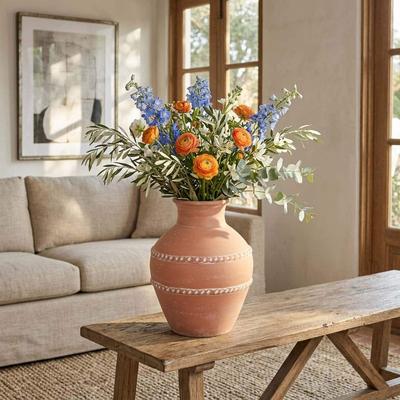
Sagebrook Home Pottery Terracotta Vase Artisan Style Traditional Classic SilhouetteAdd rustic flair instantly - Crafted from durable terracotta pottery, this decorative vase brings timeless charm to any bedroom, living room, or entryway display.64,59 $*Shipping: 0,00 $Secure redirect to the provider
-
Multicon Wholesale Hub Pneumatic Rivet Gun For Automotive & Metalwork Pneumatic Rivet Gun For Automotive & MetalworkFrom DIY enthusiasts to professional auto technicians, this pneumatic rivet gun redefines efficiency and precision in every fastening task. Crafted with a durable aluminum alloy body, it delivers reliable performance with less operator fatigue....174,97 $*Shipping: 0,00 $Secure redirect to the provider
-
What is an intransitive relation in mathematics?
In mathematics, an intransitive relation is a relation between elements where the relation does not transfer from one element to another. This means that if element A is related to element B, and element B is related to element C, it does not necessarily mean that element A is related to element C. In other words, the relation does not follow the transitive property. An example of an intransitive relation is the "is a sibling of" relation - if A is a sibling of B, and B is a sibling of C, it does not mean that A is a sibling of C. **
-
What are transitive and intransitive verbs in Japanese?
Transitive verbs in Japanese are verbs that require a direct object to complete their meaning. For example, the verb "taberu" (to eat) is transitive, as it requires a direct object such as "pan" (bread) to complete the action. Intransitive verbs, on the other hand, do not require a direct object and express an action that is performed without affecting another object. For example, the verb "aruku" (to walk) is intransitive, as it does not require a direct object to complete its meaning. Understanding the difference between transitive and intransitive verbs is important for constructing grammatically correct sentences in Japanese. **
-
What is the difference between transitive and intransitive verbs?
Transitive verbs are verbs that require a direct object to complete their meaning, while intransitive verbs do not require a direct object. For example, in the sentence "She ate the apple," "ate" is a transitive verb because it requires the direct object "the apple" to complete its meaning. In contrast, in the sentence "He sleeps," "sleeps" is an intransitive verb because it does not require a direct object. Intransitive verbs often describe actions that do not transfer to an object, such as movement or states of being. **
-
What is transitive and intransitive in the subject of Italian?
In Italian, transitive and intransitive refer to the type of verbs that can be used with a subject. Transitive verbs require a direct object to complete their meaning, while intransitive verbs do not require a direct object. For example, in the sentence "Lui mangia la mela" (He eats the apple), "mangia" is a transitive verb because it requires a direct object (la mela). On the other hand, in the sentence "Lui dorme" (He sleeps), "dorme" is an intransitive verb because it does not require a direct object. Understanding the difference between transitive and intransitive verbs is important for constructing grammatically correct sentences in Italian. **
Similar search terms for Intransitive
-
What is the difference between a transitive and an intransitive verb?
A transitive verb is a verb that requires a direct object to complete its meaning, while an intransitive verb does not require a direct object. For example, in the sentence "She ate the apple," "ate" is a transitive verb because it requires the direct object "the apple" to complete the action. In contrast, in the sentence "He sleeps," "sleeps" is an intransitive verb because it does not require a direct object. **
-
Which is cheaper, a pottery course or owning a pottery wheel?
In general, taking a pottery course is likely to be cheaper than owning a pottery wheel. Pottery courses typically provide access to a variety of equipment, materials, and instruction for a set fee, whereas purchasing a pottery wheel can be a significant upfront investment. Additionally, pottery courses may offer the opportunity to try out different techniques and styles before committing to purchasing a wheel. Overall, taking a pottery course can be a more cost-effective way to explore pottery as a hobby or skill. **
-
What is cheaper, a pottery class or your own pottery wheel?
In general, a pottery class is usually cheaper than purchasing your own pottery wheel. Pottery classes typically provide all the necessary materials, tools, and instruction needed to create pottery pieces, whereas buying a pottery wheel can be a significant investment. Additionally, pottery classes offer the opportunity to learn from experienced instructors and interact with other students, which can enhance the overall learning experience. However, if you plan to make pottery regularly and have the space and resources to set up a pottery studio at home, investing in your own pottery wheel may be more cost-effective in the long run. **
-
What is cheaper, a pottery course or owning a pottery wheel?
In general, taking a pottery course is usually cheaper than owning a pottery wheel. Pottery courses typically provide access to a pottery wheel, kiln, and other necessary tools and materials for a set fee. On the other hand, owning a pottery wheel requires a significant upfront investment in purchasing the equipment, as well as ongoing costs for maintenance, clay, glazes, and firing. Additionally, taking a pottery course allows for instruction, guidance, and a supportive community, which can be beneficial for beginners. **
* All prices are inclusive of VAT and, if applicable, plus shipping costs. The offer information is based on the details provided by the respective shop and is updated through automated processes. Real-time updates do not occur, so deviations can occur in individual cases. ** Note: Parts of this content were created by AI.