Buy remeselnik.eu ?
We are moving the project
remeselnik.eu .
Are you interested in purchasing the domain
remeselnik.eu ?
domain@kv-gmbh.de · 0541-91531010
Buy remeselnik.eu ?
What is guerrilla tactics?
Guerrilla tactics are a form of irregular warfare used by small, mobile groups to harass and sabotage a larger, more conventional enemy force. These tactics often involve surprise attacks, ambushes, hit-and-run tactics, and blending in with the civilian population to avoid detection. Guerrilla fighters typically rely on their knowledge of the local terrain and their ability to strike quickly and then disappear to disrupt the enemy's operations and morale. **
What is a guerrilla warfare?
Guerrilla warfare is a form of irregular warfare in which a small group of combatants, often non-state actors, use tactics such as ambushes, sabotage, and hit-and-run attacks to harass and weaken a larger, more conventional military force. It is characterized by its reliance on mobility, surprise, and the support of the local population. Guerrilla warfare is often used by insurgent groups or resistance movements to challenge the authority of a government or occupying force. This type of warfare can be highly effective in asymmetrical conflicts where one side has a significant advantage in terms of resources and firepower. **

Similar search terms for Guerrilla
Top-Angebote
Products related to Guerrilla:


-
Who has very good knowledge in the field of guerrilla marketing?
One person with very good knowledge in the field of guerrilla marketing is Jay Conrad Levinson, who is often referred to as the "Father of Guerrilla Marketing." He is the author of the popular book series "Guerrilla Marketing" and has been a leading expert in the field for many years. Levinson's insights and strategies have been widely influential in the marketing world, making him a go-to resource for those seeking to understand and implement guerrilla marketing tactics. **
-
What are guerrilla warriors and can they also be called resistance fighters?
Guerrilla warriors are members of a small, mobile military force that operates using unconventional tactics such as ambushes, sabotage, and hit-and-run attacks. They often fight against a larger, more conventional military force. Resistance fighters, on the other hand, are individuals or groups who oppose an occupying or oppressive force, often using guerrilla tactics. While guerrilla warriors can be considered a type of resistance fighter, not all resistance fighters necessarily use guerrilla tactics. **
-
Is the concept of urban guerrilla contradictory to the ideology of the RAF?
The concept of urban guerrilla is not contradictory to the ideology of the RAF (Red Army Faction). In fact, the RAF embraced the idea of urban guerrilla warfare as a means to overthrow the capitalist system and establish a communist state in West Germany. The group believed in using violent and militant tactics to achieve their goals, including bombings, assassinations, and kidnappings. The RAF saw themselves as part of a global revolutionary movement and sought to inspire and support other leftist groups around the world. Therefore, the concept of urban guerrilla was central to the ideology and strategy of the RAF. **
-
Which is cheaper, a pottery course or owning a pottery wheel?
In general, taking a pottery course is likely to be cheaper than owning a pottery wheel. Pottery courses typically provide access to a variety of equipment, materials, and instruction for a set fee, whereas purchasing a pottery wheel can be a significant upfront investment. Additionally, pottery courses may offer the opportunity to try out different techniques and styles before committing to purchasing a wheel. Overall, taking a pottery course can be a more cost-effective way to explore pottery as a hobby or skill. **


What is cheaper, a pottery class or your own pottery wheel?
In general, a pottery class is usually cheaper than purchasing your own pottery wheel. Pottery classes typically provide all the necessary materials, tools, and instruction needed to create pottery pieces, whereas buying a pottery wheel can be a significant investment. Additionally, pottery classes offer the opportunity to learn from experienced instructors and interact with other students, which can enhance the overall learning experience. However, if you plan to make pottery regularly and have the space and resources to set up a pottery studio at home, investing in your own pottery wheel may be more cost-effective in the long run. **
What is cheaper, a pottery course or owning a pottery wheel?
In general, taking a pottery course is usually cheaper than owning a pottery wheel. Pottery courses typically provide access to a pottery wheel, kiln, and other necessary tools and materials for a set fee. On the other hand, owning a pottery wheel requires a significant upfront investment in purchasing the equipment, as well as ongoing costs for maintenance, clay, glazes, and firing. Additionally, taking a pottery course allows for instruction, guidance, and a supportive community, which can be beneficial for beginners. **
Top-Angebote
Products related to Guerrilla:
-
Gmt Games The Guerrilla Generation - Historical Strategy Game Collection COIN MultipackThe Guerrilla Generation is a historical strategy game collection from GMT Games and the second COIN multipack. It brings together four separate games examining Cold War insurgencies in Central and South America between 1968 and 1992. Each scenario explores a different form of rebellion, from rural insurgencies and flexible urban guerrilla movements to externally supported raiders and highly rigid ideological groups. The collection is designed to help players compare how organization, strategy, and relationships with civilian populations shape an insurgency. These are longer and more complex individual games than those included in The British Way. The set also introduces a linked campaign format in which two games can be experienced simultaneously side by side, creating a broader strategic narrative across related conflicts. This collection features four separate COIN games set during the Cold War in Latin America, exploring contrasting insurgent structures.92,99 £*Shipping: 0,00 £Secure redirect to the provider
-
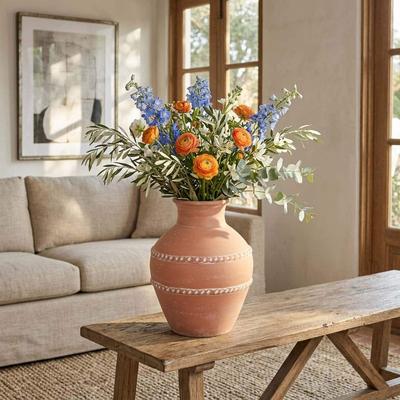
Sagebrook Home Pottery Terracotta Vase Artisan Style Traditional Classic SilhouetteAdd rustic flair instantly - Crafted from durable terracotta pottery, this decorative vase brings timeless charm to any bedroom, living room, or entryway display.64,59 $*Shipping: 0,00 $Secure redirect to the provider
-
What is guerrilla tactics?
Guerrilla tactics are a form of irregular warfare used by small, mobile groups to harass and sabotage a larger, more conventional enemy force. These tactics often involve surprise attacks, ambushes, hit-and-run tactics, and blending in with the civilian population to avoid detection. Guerrilla fighters typically rely on their knowledge of the local terrain and their ability to strike quickly and then disappear to disrupt the enemy's operations and morale. **
-
What is a guerrilla warfare?
Guerrilla warfare is a form of irregular warfare in which a small group of combatants, often non-state actors, use tactics such as ambushes, sabotage, and hit-and-run attacks to harass and weaken a larger, more conventional military force. It is characterized by its reliance on mobility, surprise, and the support of the local population. Guerrilla warfare is often used by insurgent groups or resistance movements to challenge the authority of a government or occupying force. This type of warfare can be highly effective in asymmetrical conflicts where one side has a significant advantage in terms of resources and firepower. **
-
Who has very good knowledge in the field of guerrilla marketing?
One person with very good knowledge in the field of guerrilla marketing is Jay Conrad Levinson, who is often referred to as the "Father of Guerrilla Marketing." He is the author of the popular book series "Guerrilla Marketing" and has been a leading expert in the field for many years. Levinson's insights and strategies have been widely influential in the marketing world, making him a go-to resource for those seeking to understand and implement guerrilla marketing tactics. **
-
What are guerrilla warriors and can they also be called resistance fighters?
Guerrilla warriors are members of a small, mobile military force that operates using unconventional tactics such as ambushes, sabotage, and hit-and-run attacks. They often fight against a larger, more conventional military force. Resistance fighters, on the other hand, are individuals or groups who oppose an occupying or oppressive force, often using guerrilla tactics. While guerrilla warriors can be considered a type of resistance fighter, not all resistance fighters necessarily use guerrilla tactics. **
Similar search terms for Guerrilla
-
Is the concept of urban guerrilla contradictory to the ideology of the RAF?
The concept of urban guerrilla is not contradictory to the ideology of the RAF (Red Army Faction). In fact, the RAF embraced the idea of urban guerrilla warfare as a means to overthrow the capitalist system and establish a communist state in West Germany. The group believed in using violent and militant tactics to achieve their goals, including bombings, assassinations, and kidnappings. The RAF saw themselves as part of a global revolutionary movement and sought to inspire and support other leftist groups around the world. Therefore, the concept of urban guerrilla was central to the ideology and strategy of the RAF. **
-
Which is cheaper, a pottery course or owning a pottery wheel?
In general, taking a pottery course is likely to be cheaper than owning a pottery wheel. Pottery courses typically provide access to a variety of equipment, materials, and instruction for a set fee, whereas purchasing a pottery wheel can be a significant upfront investment. Additionally, pottery courses may offer the opportunity to try out different techniques and styles before committing to purchasing a wheel. Overall, taking a pottery course can be a more cost-effective way to explore pottery as a hobby or skill. **
-
What is cheaper, a pottery class or your own pottery wheel?
In general, a pottery class is usually cheaper than purchasing your own pottery wheel. Pottery classes typically provide all the necessary materials, tools, and instruction needed to create pottery pieces, whereas buying a pottery wheel can be a significant investment. Additionally, pottery classes offer the opportunity to learn from experienced instructors and interact with other students, which can enhance the overall learning experience. However, if you plan to make pottery regularly and have the space and resources to set up a pottery studio at home, investing in your own pottery wheel may be more cost-effective in the long run. **
-
What is cheaper, a pottery course or owning a pottery wheel?
In general, taking a pottery course is usually cheaper than owning a pottery wheel. Pottery courses typically provide access to a pottery wheel, kiln, and other necessary tools and materials for a set fee. On the other hand, owning a pottery wheel requires a significant upfront investment in purchasing the equipment, as well as ongoing costs for maintenance, clay, glazes, and firing. Additionally, taking a pottery course allows for instruction, guidance, and a supportive community, which can be beneficial for beginners. **
* All prices are inclusive of VAT and, if applicable, plus shipping costs. The offer information is based on the details provided by the respective shop and is updated through automated processes. Real-time updates do not occur, so deviations can occur in individual cases. ** Note: Parts of this content were created by AI.