Buy remeselnik.eu ?
We are moving the project
remeselnik.eu .
Are you interested in purchasing the domain
remeselnik.eu ?
domain@kv-gmbh.de · 0541-91531010
Buy remeselnik.eu ?
How did the disintegration of Yugoslavia happen?
The disintegration of Yugoslavia was a complex process that was influenced by a combination of historical, political, and ethnic factors. Tensions between the different ethnic groups within Yugoslavia, including Serbs, Croats, Bosniaks, and others, had been simmering for decades. The death of the long-time leader Josip Broz Tito in 1980 and the subsequent economic and political instability created an environment ripe for conflict. Nationalist sentiments and the rise of political leaders who exploited ethnic divisions further fueled the disintegration. The situation escalated into a series of violent conflicts, including the Croatian War of Independence and the Bosnian War, ultimately leading to the breakup of Yugoslavia into several independent countries. **
Has the disintegration of Yugoslavia exposed the true nature of religion?
The disintegration of Yugoslavia did reveal some aspects of the true nature of religion, as it played a significant role in fueling ethnic and nationalist tensions that ultimately led to the violent breakup of the country. The conflict between different religious and ethnic groups, such as Orthodox Serbs, Catholic Croats, and Bosnian Muslims, highlighted how religion can be manipulated and used to justify violence and discrimination. However, it is important to note that the conflict was also driven by political and economic factors, and not solely by religious differences. **

Similar search terms for Disintegration
Top-Angebote
Products related to Disintegration:


-
What was the reason for the disintegration of the Anti-Hitler coalition?
The disintegration of the Anti-Hitler coalition can be attributed to several factors. One major reason was the differing ideologies and goals of the Allied powers, particularly the United States and the Soviet Union. The growing tensions between the capitalist West and the communist East played a significant role in the breakdown of the coalition. Additionally, disagreements over post-war territorial arrangements and the establishment of spheres of influence further strained the alliance. Ultimately, these conflicting interests and ideologies led to the dissolution of the Anti-Hitler coalition after the defeat of Nazi Germany. **
-
Could Brexit be the beginning of the disintegration of the EU or does it even motivate others to come together in the United States of Europe?
Brexit could potentially lead to further disintegration of the EU as it sets a precedent for other member states to consider leaving. However, it could also serve as a wake-up call for the remaining EU countries to come together more closely and strengthen their unity. The idea of a United States of Europe may gain traction as a response to the challenges posed by Brexit, but it would require significant political will and cooperation among member states to make it a reality. **
-
Which is cheaper, a pottery course or owning a pottery wheel?
In general, taking a pottery course is likely to be cheaper than owning a pottery wheel. Pottery courses typically provide access to a variety of equipment, materials, and instruction for a set fee, whereas purchasing a pottery wheel can be a significant upfront investment. Additionally, pottery courses may offer the opportunity to try out different techniques and styles before committing to purchasing a wheel. Overall, taking a pottery course can be a more cost-effective way to explore pottery as a hobby or skill. **
-
What is cheaper, a pottery class or your own pottery wheel?
In general, a pottery class is usually cheaper than purchasing your own pottery wheel. Pottery classes typically provide all the necessary materials, tools, and instruction needed to create pottery pieces, whereas buying a pottery wheel can be a significant investment. Additionally, pottery classes offer the opportunity to learn from experienced instructors and interact with other students, which can enhance the overall learning experience. However, if you plan to make pottery regularly and have the space and resources to set up a pottery studio at home, investing in your own pottery wheel may be more cost-effective in the long run. **


What is cheaper, a pottery course or owning a pottery wheel?
In general, taking a pottery course is usually cheaper than owning a pottery wheel. Pottery courses typically provide access to a pottery wheel, kiln, and other necessary tools and materials for a set fee. On the other hand, owning a pottery wheel requires a significant upfront investment in purchasing the equipment, as well as ongoing costs for maintenance, clay, glazes, and firing. Additionally, taking a pottery course allows for instruction, guidance, and a supportive community, which can be beneficial for beginners. **
Which is cheaper, a pottery course or buying your own pottery wheel?
In general, taking a pottery course is likely to be cheaper than buying your own pottery wheel. Pottery courses typically provide access to all the necessary equipment, materials, and instruction for a set fee, whereas purchasing a pottery wheel can be a significant investment. Additionally, pottery courses offer the opportunity to learn from experienced instructors and interact with other students, which can enhance the overall learning experience. However, if you plan to continue practicing pottery long-term, buying your own pottery wheel may eventually be more cost-effective. **
Top-Angebote
Products related to Disintegration:
-
Close To The Knives: A Memoir Of Disintegration by David Wojnarowicz - Non Fiction - PaperbackTitle:. Close to the Knives: A Memoir of Disintegration (Canons) Condition: BRAND NEW. Format: Paperback. ISBN: 9781786890276 Overview:. Step into the raw, unflinching world of David Wojnarowicz with Close to the Knives: A Memoir of Disintegration (Canons). This Canons edition gathers the author’s fearless, visceral portraits of his life—from a violent, unsettled suburban childhood to streetwise survival on the piers and avenues of New York City. Through diary-like ruminations, essays, and intensely personal recollections, Wojnarowicz maps how art, sexuality, and politics collide in a life lived at the edge of society. The memoir confronts the AIDS crisis with immediacy and moral clarity, while tracing an unraveling sense of family, community, and belonging. The prose is angular and lyrical, sometimes jagged with pain, often incandescent with beauty. It refuses to soften or idealize its subjects, insisting that truth is a practice, not a refuge. Reading Close to the Knives is an act of witnessing—one that challenges readers to question the structures that marginalize outsiders and to consider how art can resist erasure. For new readers and longtime fans, this Canons edition offers a crisp, accessible entry into Wojnarowicz’s world, preserving the intensity that has made the book a touchstone in queer, street, and literary histories. What Makes This Book Stand Out:. Few memoirs blend street realism with visionary prose the way Close to the Knives does. Wojnarowicz writes with a raw, unguarded honesty that peers through the haze of night life, poverty, and illness to reveal the fragile humanity beneath. The collection moves across zones of danger and tenderness—violent childhood experiences, nights on New York City’s docks and piers, and a relentless pursuit of creative meaning in the face of prejudice and political hostility. The text is not merely a chronicle of events; it’s a moral map of a life spent resisting commodification and cynicism. Its candid observations about sexuality, art, and AIDS activism anticipate later conversations in LGBTQ+ literature and contemporary art, making Close to the Knives not just a memoir but a compact historical record of a generation’s struggle and resilience. Who This Book Is Perfect For:. Ideal for readers who crave memoirs that push boundaries, for art lovers seeking the heartbeat behind the studio, and for anyone exploring queer history and the AIDS era. This book suits students of 20th-century urban culture, collectors of Canons editions, and gift buyers looking for a bold, enduring voice. Whether you read for literary flair, social insight, or an unvarnished portrait of survival, Close to the Knives offers a demanding but deeply rewarding reading experience. It also works as a companion text for courses on contemporary art, gender studies, and cultural history. Key Highlights:. Unflinching, first-person memoir by a defining 1980s New York artist. Blends street life, art, and political critique with lyrical...99,99 £*Shipping: 0,00 £Secure redirect to the provider
-
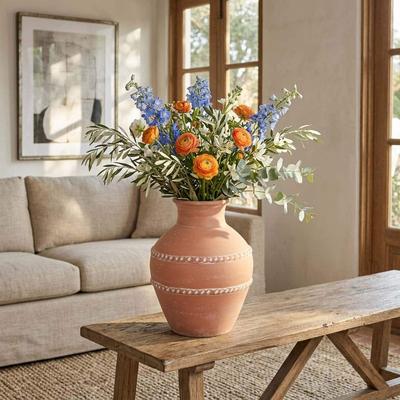
Sagebrook Home Pottery Terracotta Vase Artisan Style Traditional Classic SilhouetteAdd rustic flair instantly - Crafted from durable terracotta pottery, this decorative vase brings timeless charm to any bedroom, living room, or entryway display.64,59 $*Shipping: 0,00 $Secure redirect to the provider
-
How did the disintegration of Yugoslavia happen?
The disintegration of Yugoslavia was a complex process that was influenced by a combination of historical, political, and ethnic factors. Tensions between the different ethnic groups within Yugoslavia, including Serbs, Croats, Bosniaks, and others, had been simmering for decades. The death of the long-time leader Josip Broz Tito in 1980 and the subsequent economic and political instability created an environment ripe for conflict. Nationalist sentiments and the rise of political leaders who exploited ethnic divisions further fueled the disintegration. The situation escalated into a series of violent conflicts, including the Croatian War of Independence and the Bosnian War, ultimately leading to the breakup of Yugoslavia into several independent countries. **
-
Has the disintegration of Yugoslavia exposed the true nature of religion?
The disintegration of Yugoslavia did reveal some aspects of the true nature of religion, as it played a significant role in fueling ethnic and nationalist tensions that ultimately led to the violent breakup of the country. The conflict between different religious and ethnic groups, such as Orthodox Serbs, Catholic Croats, and Bosnian Muslims, highlighted how religion can be manipulated and used to justify violence and discrimination. However, it is important to note that the conflict was also driven by political and economic factors, and not solely by religious differences. **
-
What was the reason for the disintegration of the Anti-Hitler coalition?
The disintegration of the Anti-Hitler coalition can be attributed to several factors. One major reason was the differing ideologies and goals of the Allied powers, particularly the United States and the Soviet Union. The growing tensions between the capitalist West and the communist East played a significant role in the breakdown of the coalition. Additionally, disagreements over post-war territorial arrangements and the establishment of spheres of influence further strained the alliance. Ultimately, these conflicting interests and ideologies led to the dissolution of the Anti-Hitler coalition after the defeat of Nazi Germany. **
-
Could Brexit be the beginning of the disintegration of the EU or does it even motivate others to come together in the United States of Europe?
Brexit could potentially lead to further disintegration of the EU as it sets a precedent for other member states to consider leaving. However, it could also serve as a wake-up call for the remaining EU countries to come together more closely and strengthen their unity. The idea of a United States of Europe may gain traction as a response to the challenges posed by Brexit, but it would require significant political will and cooperation among member states to make it a reality. **
Similar search terms for Disintegration
-
Which is cheaper, a pottery course or owning a pottery wheel?
In general, taking a pottery course is likely to be cheaper than owning a pottery wheel. Pottery courses typically provide access to a variety of equipment, materials, and instruction for a set fee, whereas purchasing a pottery wheel can be a significant upfront investment. Additionally, pottery courses may offer the opportunity to try out different techniques and styles before committing to purchasing a wheel. Overall, taking a pottery course can be a more cost-effective way to explore pottery as a hobby or skill. **
-
What is cheaper, a pottery class or your own pottery wheel?
In general, a pottery class is usually cheaper than purchasing your own pottery wheel. Pottery classes typically provide all the necessary materials, tools, and instruction needed to create pottery pieces, whereas buying a pottery wheel can be a significant investment. Additionally, pottery classes offer the opportunity to learn from experienced instructors and interact with other students, which can enhance the overall learning experience. However, if you plan to make pottery regularly and have the space and resources to set up a pottery studio at home, investing in your own pottery wheel may be more cost-effective in the long run. **
-
What is cheaper, a pottery course or owning a pottery wheel?
In general, taking a pottery course is usually cheaper than owning a pottery wheel. Pottery courses typically provide access to a pottery wheel, kiln, and other necessary tools and materials for a set fee. On the other hand, owning a pottery wheel requires a significant upfront investment in purchasing the equipment, as well as ongoing costs for maintenance, clay, glazes, and firing. Additionally, taking a pottery course allows for instruction, guidance, and a supportive community, which can be beneficial for beginners. **
-
Which is cheaper, a pottery course or buying your own pottery wheel?
In general, taking a pottery course is likely to be cheaper than buying your own pottery wheel. Pottery courses typically provide access to all the necessary equipment, materials, and instruction for a set fee, whereas purchasing a pottery wheel can be a significant investment. Additionally, pottery courses offer the opportunity to learn from experienced instructors and interact with other students, which can enhance the overall learning experience. However, if you plan to continue practicing pottery long-term, buying your own pottery wheel may eventually be more cost-effective. **
* All prices are inclusive of VAT and, if applicable, plus shipping costs. The offer information is based on the details provided by the respective shop and is updated through automated processes. Real-time updates do not occur, so deviations can occur in individual cases. ** Note: Parts of this content were created by AI.